Find your fit
Who it is for
A team running several projects with shared specialists can inspect assigned hours and remaining capacity before committing new work. The Workload report needs scheduled items, owners and estimates to make its totals meaningful.
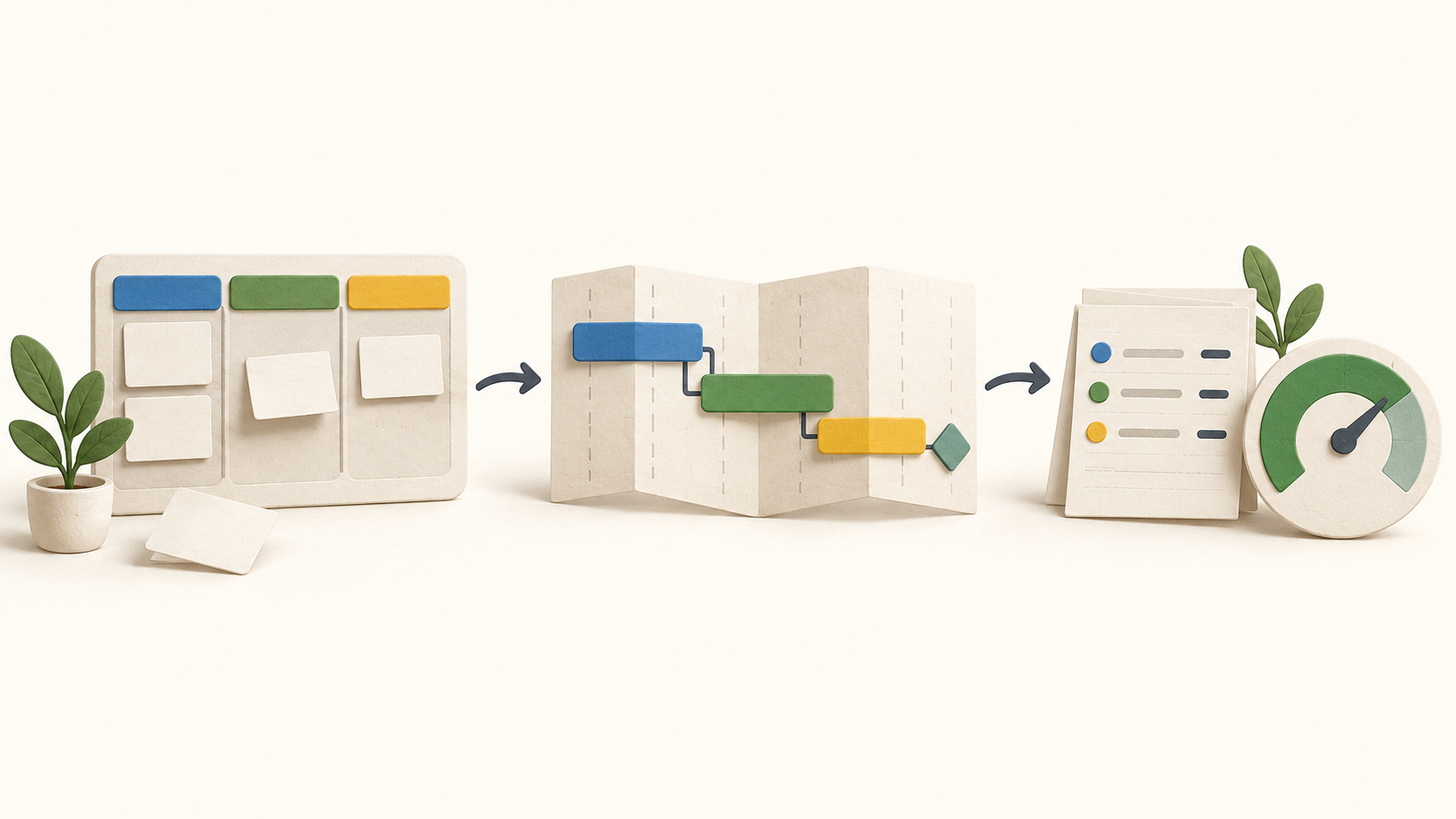
Project leads can arrange tasks on Kanban, connect dependencies and milestones in Gantt, and use the portfolio view to compare projects in the same workspace. Cross-board dependencies work within a workspace; test a representative schedule before relying on rescheduling behavior.
Teams that log project effort can enter time on tasks, then compare estimated and actual hours or inspect cost based on set hourly rates. This is useful where workload and actual effort need to be reconciled.
The work it supports
Core capabilities
Task management. Track tasks on Kanban boards across projects.
Project planning. Set dependencies between items in the same workspace.
Project reporting. Track project progress through Gantt, dashboards and a portfolio overview.
Understand the offer
Pricing and getting started
The current public offer is one Teamhood plan with Gantt, capacity planning, time tracking, charts, dependencies and automation; Enterprise is custom-priced for larger IT and procurement needs, with SSO, SCIM and dedicated or self-hosted options. Existing Classic customers keep their prior terms.
The pricing page displays €5/$6 per user per month billed yearly, or €6/$7 billed monthly, before VAT. A minimum of three licenses applies. Active users and open invites each occupy one license; check the checkout total for your currency, tax and actual seat count.
Teamhood advertises a first month free without a credit card. The current FAQ says the trial ends without a subscription and its data is not deleted. An older getting-started page still says fourteen days, so verify the offered period at signup.
Look a little closer
Before you choose
Kanban rows can separate teams, work types or projects while columns show workflow status. Work-in-progress limits require activation in workspace settings; try the board with actual status names before scaling it to multiple teams.
Gantt supports four dependency relationships and milestones. Dependencies can cross boards inside one workspace. Auto scheduling depends on a workspace setting and can shift linked dates, so test date locks and the selected drag behavior on a sample plan.
Capacity figures need schedules, assignees and estimates. By default, an item estimate is split evenly among multiple assignees; manual percentages depend on a company-level setting. Check whether that allocation matches how your specialists really divide time.
Time may be tracked live or entered later. The Time and Cost view compares logged hours with available capacity and can calculate cost from user rates; confirm the rate setup and export a sample time log before using it for financial decisions.
Dashboards can use item lists and charts, and Portfolio Overview compares projects within a workspace. Its schedule and earned-value measures depend on the selected weighting of budget, duration or estimate; choose the measure that fits your work before treating a colored status as a decision.
Current pricing differs from older Teamhood guidance, which still mentions a fourteen-day trial and legacy plan names. The current page advertises a month and a single Teamhood plan plus Enterprise; confirm trial length, license count and Classic terms in the signup or agreement.
No signup, task change, dependency reschedule, workload allocation, time log, dashboard setup, trial conversion, API access or checkout was exercised. These descriptions come from official public pages, not hands-on results.
13 distinct sources behind this profile. Research observed Oct 15, 2026. Features and offers can change.
View sources and research →