Find your fit
Who it is for
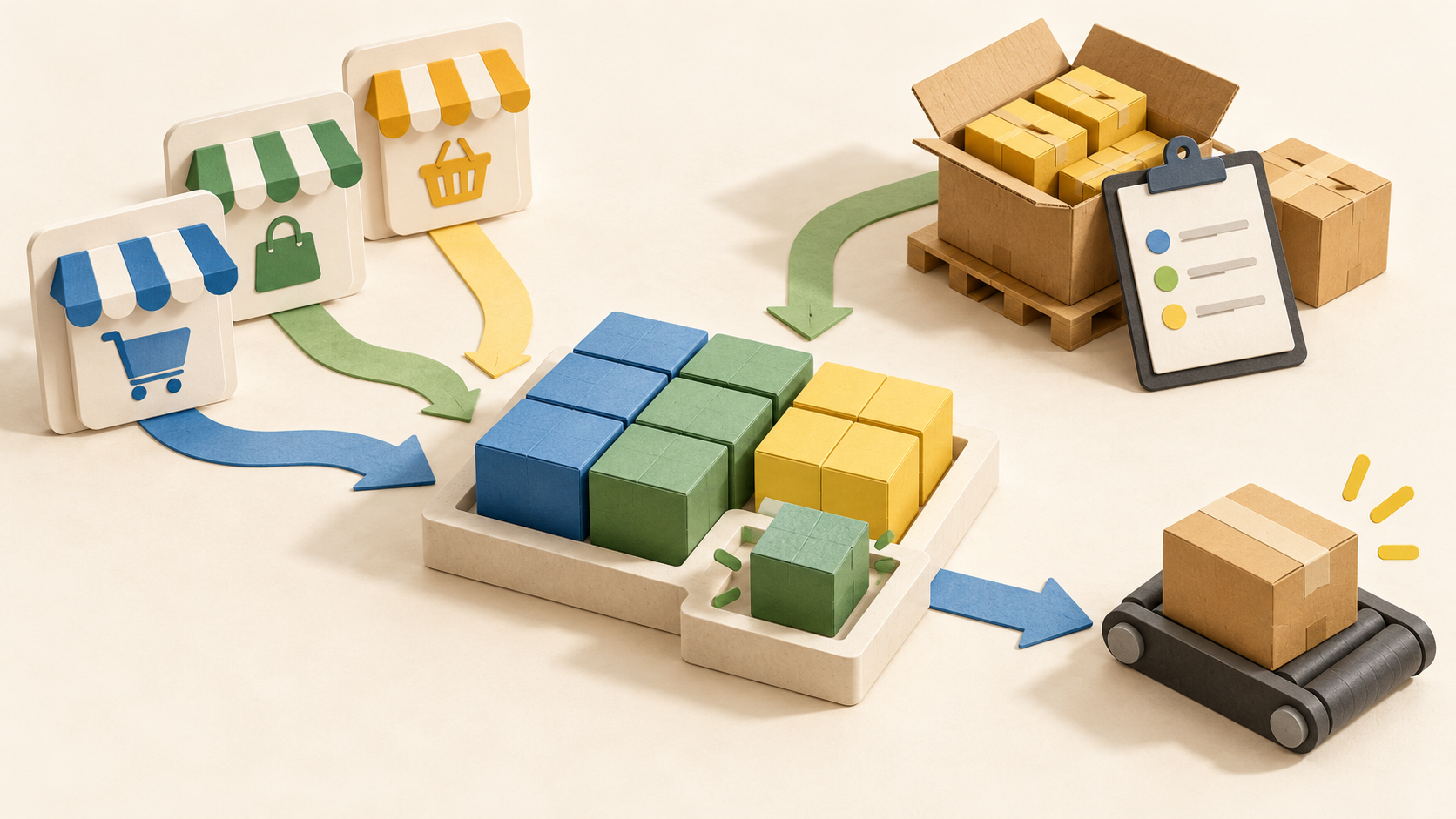
The vendor positions Essentials for sellers that have moved beyond spreadsheets and disconnected tools. It is a fit to assess when orders arrive from several marketplaces and stock is held in multiple warehouses or allocated to particular channels, campaigns or fulfillment methods.
Sellercloud combines a broad operations platform with Skustack warehouse management. Buyers should identify how much warehouse scanning, guided picking, 3PL work and custom integration they need before selecting a plan; those capabilities can affect the quoted package and add-on costs.
The work it supports
Core capabilities
Sellercloud synchronizes inventory with connected marketplaces and carts. It can reserve stock for an order or a special allocation, and assign stock using criteria such as region, shipping method or proximity. Map every channel SKU to the intended product and reconcile opening quantities before enabling automated updates.
The system tracks stock across bins and warehouses, and can link component quantities to a kit. That matters when the same unit is offered in multiple listings or as part of a bundle. Test a sale, return and transfer against a sample of ordinary and bundled SKUs before treating the system as the stock master.
Orders download from connected sales channels into one work queue. Sellercloud can send shipment tracking back to the originating channel, run selected order rules, and help process refunds and cancellations where supported. Test exception cases, not just a straightforward shipped order.
Purchasing tools cover supplier information, purchase orders, receiving and reconciliation. Low-stock rules can create a purchase order, while an approval step can prevent it from being sent before review. Check the actual reorder inputs and approval rights before turning on purchasing automation.
Skustack is the named WMS for receiving, bin-level visibility, picking, shipments and returns. Its documentation describes barcode scanning and guided pick routes. Confirm whether the required Skustack functions are included in the selected Sellercloud package or quoted as an add-on.
Integrated shipping covers label printing, scan-based checks and batch processing. Sellers can bring their own carrier accounts and negotiated rates. Verify supported services, label formats and the complete carrier charge with actual parcel examples.
Understand the offer
Pricing and getting started
The captured pricing page lists Essentials from $1,349 per month, Growth from $1,849 per month and Enterprise on custom pricing. These are starting points: plans are typically annual subscriptions, and the final proposal depends on order volume, fulfillment mix, selected functions and add-ons.
Sellercloud says pricing is chiefly per order and varies by order count and type, including merchant-fulfilled versus FBA. Orders above the included volume incur a further per-order fee. The company says users and integrations do not carry separate seat or connection charges. Ask for the included monthly volume, per-order rates and a peak-season scenario in writing.
Essentials lists basic warehouse management; Growth lists advanced Skustack WMS. The pricing FAQ also describes Skustack as a possible additional monthly charge, so reconcile the exact WMS entitlement in the quote. Onboarding is generally included in the base plan, while custom integrations and other advanced modules can add cost.
Look a little closer
Before you choose
A useful pilot connects a representative marketplace and storefront, reconciles stock across a few SKUs, places an order that reserves inventory, then checks the resulting pick, label, tracking update and any return. Add a kit, low-stock item and multiple-location case before widening the rollout.
Get a written annual proposal that names the selected tier, included order count, merchant-fulfilled and FBA rates, overage treatment, Skustack functions, implementation services and any custom integrations. The public starting price alone cannot establish the total cost for a particular seller.
This profile reflects current official product and pricing pages. No Sellercloud account, stock sync, purchase order, warehouse scan, label purchase or order shipment was operated. Workflow and integration behavior should be tested with the seller’s own channels and team.
7 distinct sources behind this profile. Research observed Oct 18, 2026. Features and offers can change.
View sources and research →