Find your fit
Who it is for
It is a fit to evaluate for an engineering or reliability team that already receives monitoring events and needs a consistent way to decide which ones become incidents, who responds and how progress is communicated. Alerts can be acknowledged or dismissed without becoming incidents.
A service owner can use the catalog to connect systems with owners and dependencies, then define incident roles and runbooks around that service. This needs accurate catalog data and clear escalation ownership before an emergency occurs.
The work it supports
Core capabilities
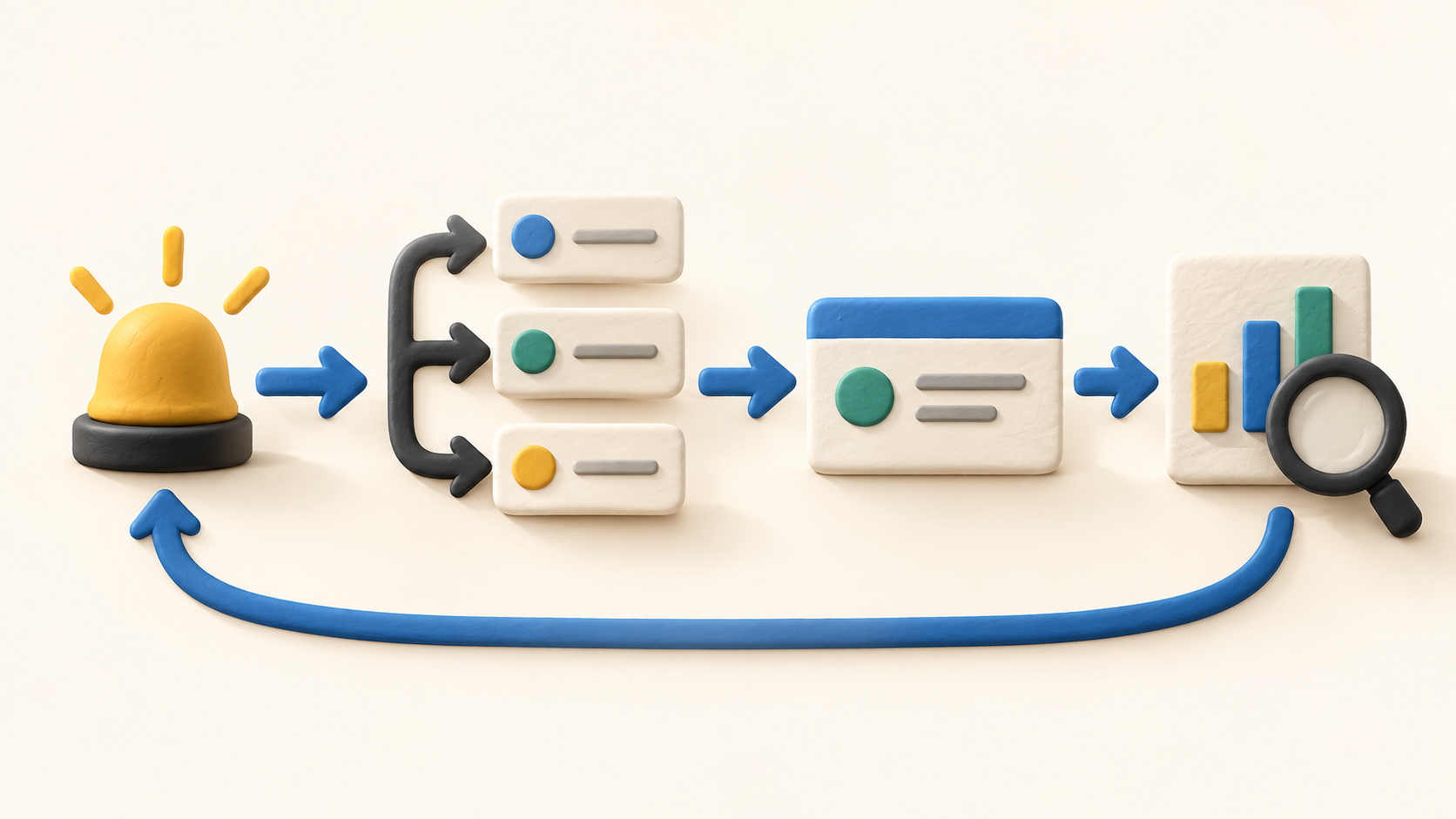
Signals lets teams select events worth notifying on, subscribe multiple teams to an event, and route the resulting alerts. Team-based schedules and escalation policies help direct a notification to the responsible responder. Test a representative alert path, including an acknowledgment and a missed escalation, before relying on it for production.
During an incident, responders can coordinate in Slack or Microsoft Teams. FireHydrant can create a chat channel or ticket and notify stakeholders through runbook steps, reducing the number of manual setup actions in the first minutes. Configure integrations and permissions before treating these steps as automatic.
Runbooks can start manually or based on incident details. Teams can use them to assign roles, create tracking artifacts and send updates consistently. Configure the triggers, permissions and integrations before relying on an automated step.
FireHydrant supports public status pages and can use runbooks to publish updates during an incident. Decide which audience sees which update and rehearse approvals before automating customer-facing messages.
After resolution, retrospectives and incident metrics can help a team examine what happened, including alert, on-call and impact measures. Treat the reported measures as inputs to a review, not as guaranteed improvement.
The service catalog can show which team owns a service, its dependencies and recent deployments, and support service-specific response workflows. Confirm the source of service data and who maintains it before using it for escalation decisions.
Understand the offer
Pricing and getting started
The Free tier lists up to 10 responders, two runbooks, a Slack and Teams chatbot, one public status page and three integrations. New accounts start with a 14-day Pro trial without a credit card; the vendor says an account that is not upgraded moves to the limited Free plan after the trial.
The October 20, 2026 pricing page displays Pro at $25 per responder per month billed annually. It lists five runbooks, one retrospective template, unlimited public status pages, a service catalog, ten custom fields and five integrations. Confirm the actual currency, tax, responder count and order terms before budgeting.
Pro lists Signals on-call scheduling and escalation policies, with push, Slack, Teams and email notifications. The FAQ separately states that Signals is charged by the number of alerts sent; SMS and voice are described as available for purchase. Budget both responder seats and expected alert volume, and confirm any optional notification charges.
Enterprise uses custom pricing and adds unlimited runbooks, private incidents and status pages, incident analytics, and broader integration allowances. FireHydrant AI features are listed in this tier. Obtain a written feature and support scope before assuming the AI or private features are included in another tier.
Look a little closer
Before you choose
Pilot with a synthetic monitoring event: see which team receives an alert, acknowledge or dismiss it, then open a test incident and check the chat, runbook, role and status-update path. This validates actual configuration and response ownership without using a live outage.
For procurement, verify the expected alert count as well as responder seats; the vendor describes these as distinct charges. Confirm the selected plan’s runbook and page limits, private incident needs, AI rights, notification methods and support terms. The public feature pages describe platform capability more broadly than the pricing tiers.
7 distinct sources behind this profile. Research observed Oct 20, 2026. Features and offers can change.
View sources and research →